3 Oct 2026
Private Networks Drive Sophistication in Prediction Markets as Polymarket Expands in 2026

Elite prediction market participants have formed closed communication channels that allow rapid coordination around high-stakes events including elections, conflicts, and natural disasters, according to reports on activity within platforms such as Polymarket. Observers note these traders describe opportunities arising from such developments as straightforward gains available for capture, while the broader market infrastructure shows increased complexity during its expansion phase throughout 2026.
Structure of Coordinated Trading Groups
Participants maintain invitation-only discussion forums where information on market movements circulates in real time, enabling collective positioning before public sentiment fully registers on prediction platforms. Data from trading volumes in October 2026 indicates these networks focus on contracts tied to verifiable outcomes, such as election results or conflict developments, rather than speculative entertainment bets. Researchers tracking platform activity have documented how group members cross-reference multiple data streams, including official announcements and independent verification sources, to refine entry and exit points.
One documented case involved traders aligning positions ahead of a major geopolitical announcement, with the private exchange allowing adjustments within minutes of new details emerging. This approach contrasts with individual retail users who often react after price shifts appear on public leaderboards. Industry figures reveal that such coordinated activity has grown alongside overall platform participation, which reached record levels in the third quarter of 2026.
Role of Platforms Like Polymarket in Market Growth
Polymarket has recorded steady increases in both user registrations and contract liquidity since the start of 2026, with particular acceleration noted in contracts covering U.S. and international political events. According to platform transparency reports, daily trading volume in politically sensitive markets rose by double-digit percentages during periods of global tension. The infrastructure supports binary outcome contracts that resolve based on official results, creating clear settlement mechanisms that attract participants seeking defined risk parameters.
Market operators have introduced additional verification layers and liquidity incentives during this period, which analysts link to the attraction of more structured trading groups. External observers from regulatory monitoring bodies, including those affiliated with the Australian Securities and Investments Commission, have noted the parallel rise in professional-grade strategies alongside retail engagement. These developments occur without direct platform endorsement of private coordination methods.
Information Flows and Event-Based Positioning
Traders within these circles prioritize primary documents and official timelines over secondary commentary when assessing contract probabilities. For instance, during periods surrounding disaster declarations or conflict escalations, group discussions center on sourcing government releases and satellite data feeds rather than opinion aggregation. Evidence from transaction patterns shows concentrated buying activity in the hours leading up to major news cycles, followed by position unwinding once outcomes stabilize.
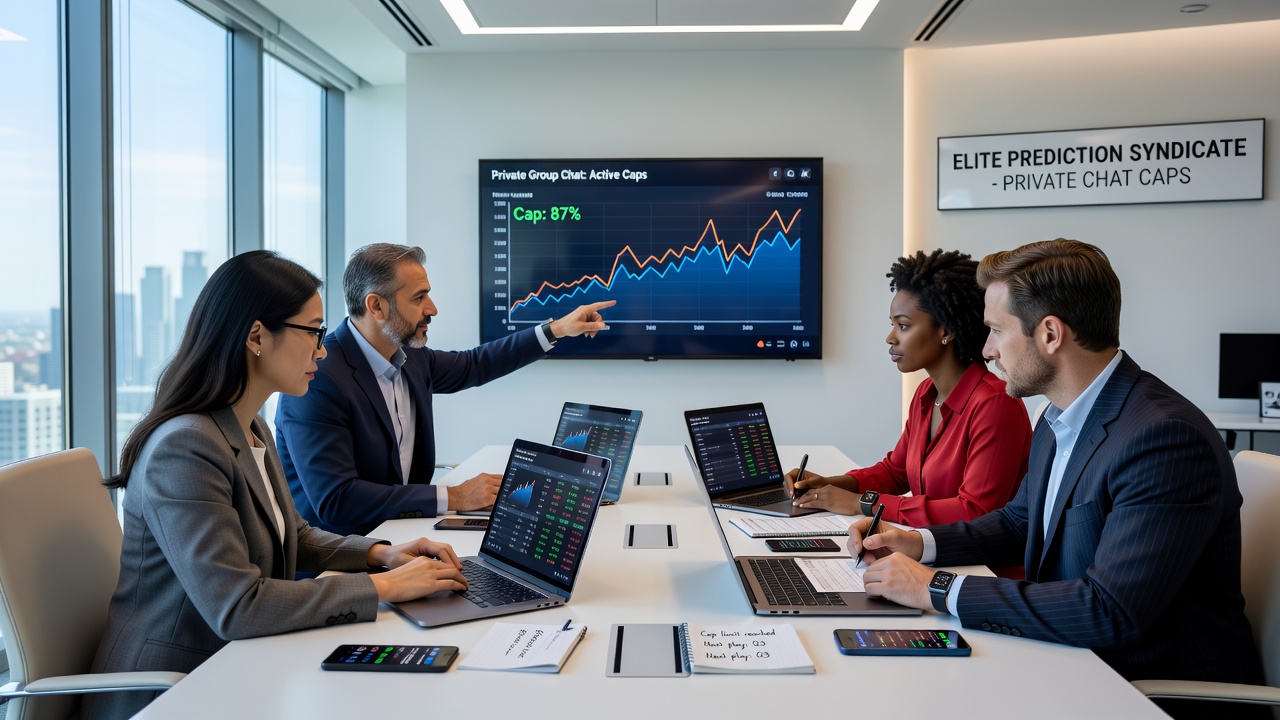
Studies from academic institutions such as those published through European Securities and Markets Authority working papers have examined similar dynamics in informationally efficient environments, finding that clustered trading can accelerate price discovery when participants share access to verification resources. In the prediction market context, this translates to faster convergence on accurate probabilities for contracts tied to measurable events like vote tallies or ceasefire agreements.
Expansion Trends Observed Through October 2026
Platform metrics compiled midway through the final quarter of 2026 show continued user growth and contract diversification, with new markets added for emerging international developments. Trading desks associated with institutional participants have increased their presence, bringing algorithmic tools that complement the manual coordination occurring in private forums. Observers note that liquidity in lower-volume contracts has improved as a result, reducing slippage for larger position sizes.
Settlement processes have also seen refinement, with faster resolution times reported for contracts dependent on third-party data providers. This operational maturation supports sustained activity levels even as market attention shifts between successive global events. Figures released by data aggregators tracking decentralized platforms indicate that prediction market capitalization has maintained upward trajectory without interruption through the autumn months.
Conclusion
The combination of private information networks and expanding platform capabilities has produced measurable shifts in how certain participants approach event contracts on sites like Polymarket. Activity remains concentrated among groups that leverage shared verification methods, while overall market participation broadens through improved accessibility and contract variety. Regulatory and academic monitoring continues to track these patterns as volumes evolve into late 2026.